


.png)

Choosing Wood for Custom Furniture: A 2026 Guide
Table of Contents
Choosing Wood for Custom Furniture: What Matters Most
Hardwood vs Softwood for Furniture: Which Should You ChooseHardwoods: Durability and LongevitySoftwoods: Workability and Warmth
Hardwoods: Durability and Longevity
Softwoods: Workability and Warmth
Durability, Janka Hardness, and Wood Movement
Cost of Different Furniture Wood SpeciesBudget-Friendly Wood AlternativesPremium Species and Investment Pieces
Budget-Friendly Wood Alternatives
Premium Species and Investment Pieces
Finishing Options for Custom Wood Furniture
Wood Species for Indoor vs Outdoor Furniture
How to Start Your Custom Furniture Project
Frequently Asked Questions
Last Updated: September 1, 2026
Choosing Wood for Custom Furniture: What Matters Most
When commissioning custom furniture, the wood you choose determines how it looks, how long it lasts, whether it'll warp in your climate, and whether you'll still love it in 20 years. At Richard Gentry Designs, we've spent over 25 years helping homeowners and designers navigate this decision. Most people approach it backwards, they fall in love with a species name or color sample, then hope it works. The smarter approach is to start with your actual requirements: the room's humidity, how the piece will be used, your budget, and your aesthetic vision. Let those constraints guide you to the right wood.
Pro Tip The biggest mistake we see: people choose wood based on Instagram photos or showroom samples, then get surprised when their piece moves, checks, or requires more maintenance than expected. Start with your climate and use case first. Aesthetics come second.
Hardwood vs Softwood for Furniture: Which Should You Choose
The distinction between hardwood and softwood is botanical, not about actual hardness. Hardwoods come from deciduous trees (oak, walnut, maple, ash), while softwoods come from conifers (pine, fir, cedar) (usda.gov). Hardwoods are generally denser, more durable, and better suited to furniture that needs to withstand regular use. Softwoods are easier to work with, take stain and finish differently, and offer their own aesthetic appeal.
Hardwoods: Durability and Longevity
Hardwoods are the default choice for heirloom-quality furniture because their density resists denting, scratching, and general wear. Walnut is dense enough to hold fine details in carving, takes a rich finish beautifully, and develops character as it ages. Oak offers similar durability with a pronounced grain pattern. Ash is lighter in color but equally tough, ideal for modern designs where you want strength without dark aesthetics.
The trade-off is workability. Hardwoods are harder to machine and require sharper tools and more skill from the craftsperson. This is why custom hardwood pieces cost more, the labor is genuinely more demanding. But that difficulty also means fewer mistakes, tighter joinery, and pieces that hold together for generations. Hardwood furniture responds beautifully to finishes, with natural grain becoming a design element that develops a patina improving appearance over time.

Softwoods: Workability and Warmth
Softwoods like pine and cedar are easier to work with, enabling faster production and lower labor costs. Pine has a warm, rustic appeal perfect for farmhouse or cottage aesthetics. Cedar brings natural rot resistance and a distinctive scent.
The limitation is durability. Softwoods dent more easily, scratch more readily, and don't hold up as well to heavy use. A pine coffee table in a busy household will show wear faster than a walnut equivalent. Softwoods also absorb stain unevenly, which is why softwood pieces often look less refined unless the craftsperson uses special techniques. If you love softwood's look but want better durability, many custom makers use softwood for visual appeal in lower-stress areas and hardwood for structural components.
Durability, Janka Hardness, and Wood Movement
The Janka hardness scale measures resistance to denting and wear, but it's not the whole story. A wood can score high on the Janka scale and still move seasonally, warp if moisture fluctuates, or develop checks if it dries too quickly. Understanding wood movement is actually more important for custom furniture than raw hardness.
Wood moves because it responds to humidity. In winter when homes are heated and dry, wood shrinks. In summer when humidity rises, it expands. Some woods move more than others, teak and walnut are relatively stable, while cherry moves noticeably and pine can move dramatically. For custom pieces meant to fit perfectly in your space, wood movement is a real consideration.
Quality custom craftspeople account for this by using kiln-dried wood, allowing wood to acclimate to your home's environment before assembly, and designing joinery that accommodates movement rather than fighting it. At Richard Gentry Designs, we use these techniques because lasting pieces move with your home's climate, not crack from ignoring physics.
Heartwood versus sapwood also matters. Heartwood is the inner, older part of the tree and is generally more stable and rot-resistant. Sapwood is the outer, younger ring and is lighter in color but less durable. Quality custom makers use heartwood for structural components.
Key Takeaway Wood movement is inevitable. The question is whether your piece is designed to accommodate it gracefully or whether it'll develop visible checks and gaps. Joinery design and wood selection work together, neither matters in isolation.
Cost of Different Furniture Wood Species
The price of custom wood furniture depends on the wood species, design complexity, finishing process, and craftsperson's skill level.
Budget-Friendly Wood Alternatives
Pine and poplar are the most affordable options. Cherry is the next tier up, harder than pine, finishes beautifully, and offers warm color tones.
Ash is an underrated value option. It's nearly as durable as oak, finishes beautifully with stain, and costs less than walnut. Many designers specify ash for custom pieces because you get real durability and aesthetic appeal without premium walnut pricing. Our Ash minimalistic modern dining chairs start at $3,750, and our 1800's Chestnut Farm Table is priced at $2,500.
Premium Species and Investment Pieces
Walnut is the most popular premium wood for custom furniture because it combines beauty, durability, and workability. Custom walnut pieces typically range from $2,850 for simpler designs up to $6,500 for complex, detailed work. Our Real Walnut Farm Table is $2,850, while our Walnut Dining Table with Ebony Accents reaches $6,500, the difference reflects complexity, size, and finishing detail.
Specialty burls and figured woods (like Thuya burl or Carpathian elm burl) command premium prices because they're rarer and require more skill to work with. Our Pair of Thuya Burl Side Tables is $4,000, and our Carpathian Elm Burl Desk is $3,400. Reclaimed wood (like our 1800's Chestnut pieces) occupies a special category, authentic reclaimed wood is genuinely scarce, carries historical character, and often costs more than new wood of equivalent species.
The real cost equation is durability-per-dollar. A $2,500 walnut piece lasting 40 years costs significantly less per year than a $1,200 mass-produced piece needing replacement in 8 years. Custom furniture from a skilled maker is an investment, not just an expense.
Finishing Options for Custom Wood Furniture
The finish you choose affects how the wood looks, performs, and what maintenance it requires.
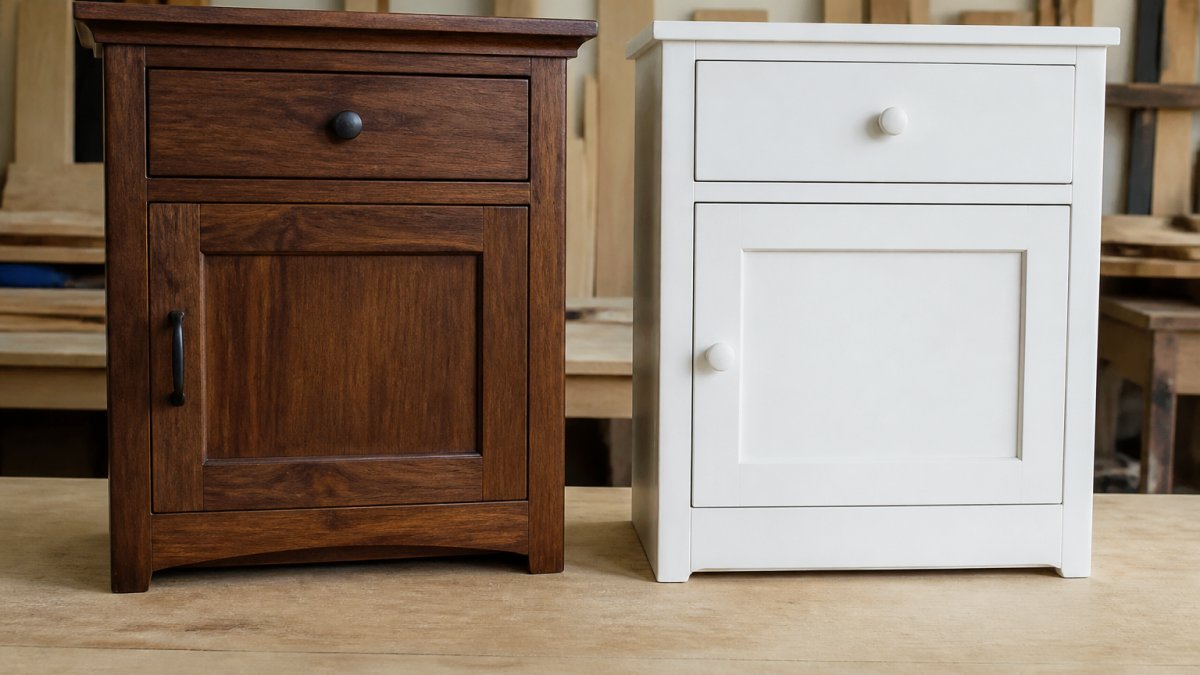
Oil finishes (like tung oil or Danish oil) penetrate the wood and enhance its natural color and grain. They're beautiful and let the wood "breathe," but offer less protection than other finishes and require regular maintenance, reapplication every year or two. Oil finishes work best for pieces that won't see heavy use or spills.

Polyurethane and lacquer finishes create a protective layer on top of the wood. They're more durable than oil, resist water and spills better, and require less maintenance. Quality custom makers use high-quality polyurethane or lacquer with multiple coats and hand-rubbing between coats to create depth and authenticity.
Wax finishes offer a middle ground, some protection, beautiful appearance, and the ability to refresh by reapplying wax. They're less durable than polyurethane but more protective than oil alone. Match the finish to the piece's intended use and your maintenance tolerance. A dining table needs polyurethane or lacquer. A decorative console can handle oil. A desk can use wax.
Watch Out A beautiful wood ruined by a poor finish is worse than ordinary wood finished beautifully. If [commissioning a custom piece](/post/how-to-commission-custom-wood-furniture), don't skimp on the finishing process. This is where craftsmanship either shines or fails.
Wood Species for Indoor vs Outdoor Furniture
Indoor and outdoor furniture have completely different requirements.
For indoor furniture, prioritize durability, aesthetics, and how the wood responds to your home's climate. Walnut, ash, oak, and cherry all work beautifully indoors. Your main consideration is moisture control, ensuring your home's humidity stays relatively stable so the wood doesn't move excessively.
Outdoor furniture demands rot resistance and weather stability. Teak is the gold standard because it's naturally rot-resistant and weathers beautifully to a silver-gray patina. Cedar is another option, naturally resistant to rot and insects, though less dense than teak. Treated pine can work for outdoor furniture if properly sealed and maintained, but requires more upkeep than naturally rot-resistant woods.
Outdoor wood needs to shed water, resist fungal growth, and handle UV exposure. This is why you wouldn't use walnut outdoors (it would rot) and why you wouldn't use teak indoors (it's overkill and expensive).
How to Start Your Custom Furniture Project
Start by defining what you need. Measure your space precisely. Understand how the piece will be used, is it a display piece or something that gets daily wear? Consider your home's climate and humidity levels. Think about your aesthetic: warm or cool tones, pronounced grain or subtle, rustic or refined.
Gather reference images from Pinterest, design magazines, and furniture showrooms. These communicate your vision far better than words alone. Bring measurements, use cases, and aesthetic references when meeting with a craftsperson.
Discuss wood options with your maker. A skilled craftsperson will ask detailed questions about your climate, maintenance tolerance, budget, and timeline, then recommend specific species and finishes. They might suggest alternatives you hadn't considered. This conversation is where expertise matters.
Understand the timeline. Custom furniture isn't fast. A complex piece might take 3-6 months from design to delivery. A simpler piece might take 6-12 weeks. Trust the process, custom furniture is a collaboration between you and the maker. You bring the vision and requirements. The maker brings technical expertise and craftsmanship.
Choosing wood for custom furniture requires balancing aesthetics, durability, climate performance, and budget. The difference between a piece that looks great for five years and one that improves for fifty years comes down to these decisions. At Richard Gentry Designs, we've spent over 25 years helping clients make these choices, understanding that every home, room, and use case is different. When you're ready to invest in a custom piece built to your specific vision and actual requirements, we're here to guide you through every step. Start with a conversation about what you need, and we'll help you find the wood and finish that will make your piece an heirloom, not just furniture.
Frequently Asked Questions
Q: What's the difference between hardwood and softwood for custom furniture?
A: Hardwoods like walnut, oak, and ash come from deciduous trees and offer superior durability, tighter grain patterns, and better resistance to wear. Softwoods like pine and fir come from conifers and are easier to work with, less expensive, and better for certain design styles. Hardwoods typically outlast softwoods, making them a strong choice for heirloom-quality furniture. Your choice depends on your budget, design vision, and how the piece will be used.
Q: How do I choose between kiln-dried and air-dried lumber for my furniture?
A: Kiln-dried wood has lower moisture content, dries faster, and is more stable during construction, reducing warping and checking. Air-dried wood retains more natural character and grain variation but takes longer and requires careful storage. For custom furniture that will last, kiln-dried hardwood is often preferred because it minimizes dimensional instability and wood movement over time, especially in climate-controlled homes.
Q: What wood species are most durable for high-traffic furniture?
A: Walnut, oak, hickory, and ash rank among the most durable woods, with Janka hardness ratings above 1,000. These species resist scratching, denting, and wear from daily use. For dining tables, desks, and chairs that see constant activity, these hardwoods maintain their appearance and structural integrity far longer than softer species. Walnut offers both durability and aesthetic appeal, making it a popular choice for custom pieces designed to become family heirlooms.
Q: How much does custom wood furniture cost compared to mass-produced pieces?
A: Custom furniture from artisan makers typically ranges from $1,400 to $6,500 depending on wood species, size, and design complexity. Mass-produced furniture often costs $500 to $2,000 but may lack durability and personalization. The difference reflects superior craftsmanship, solid wood construction, and the ability to tailor dimensions and design to your exact space. Heirloom-quality custom pieces last for many years, making the per-year cost competitive with replacing cheaper furniture multiple times.
Q: What finishing options protect custom wood furniture and affect its appearance?
A: Common finishes include oil (enhances grain but requires maintenance), polyurethane (durable and water-resistant), lacquer (smooth and protective), and wax (natural look with moderate protection). Each finish changes how the wood grain appears and how much maintenance the piece requires. Oil finishes highlight wood character but need regular reapplication. Polyurethane provides strong protection for dining tables and high-use pieces. Your artisan can recommend finishes based on your wood species, climate, and lifestyle.
Q: How does wood grain pattern affect the look of my custom furniture?
A: Wood grain patterns vary by species: walnut offers rich, dramatic grain; ash displays bold, linear patterns; oak shows pronounced open grain; and figured woods like burl create unique, swirling designs. Grain direction and color variation significantly impact visual appeal and can make each custom piece truly one-of-a-kind. Artisans carefully select and orient wood to maximize aesthetic impact. The grain pattern you choose should complement your interior design style and personal preferences.
Q: What happens if I'm not satisfied with my custom furniture once it's completed?
A: Custom furniture is built to your specifications, so satisfaction depends on clear communication throughout the design process. Work with your artisan to review detailed plans, wood samples, and dimensions before construction begins. Most reputable makers offer consultation and revision opportunities during the design phase. Once construction starts, changes become costly or impossible. Building trust with your craftsperson and being specific about your vision upfront prevents disappointment and ensures the final piece meets your expectations.
SHOP
This article was written using GrandRanker
Comments