


Custom Cabinetry vs Mass-Produced: 2026 Guide
Table of Contents
Custom Cabinetry vs Mass-Produced Alternatives: What's the Real Difference?
Definitions: Custom, Semi-Custom, Stock, and RTA
Custom vs Semi-Custom Cabinets: Where the Line Falls
Custom Cabinets Cost: What You Pay For and What You Get
Where the money actually goes
The costs that don't show up on the cabinet quote
A worked example
Ready-to-Assemble Cabinets Pros and Cons
Custom Cabinet Lead Time: Production, Delivery, and Installation
What pushes a project to the long end
How to sequence the project
Materials and Construction Quality: What to Inspect
Construction Specifications and Quality Checks
Fit, Design Flexibility, and Finishes for Awkward Spaces
A Practical Decision Framework for Your Kitchen Remodel
Frequently Asked Questions
Last Updated: October 19, 2026
Custom Cabinetry vs Mass-Produced Alternatives: What's the Real Difference?
Walk into any big-box store and you can order a full set of kitchen cabinets today. That gap in speed and price explains most of the debate around custom cabinetry vs mass produced alternatives, but it hides the real question: which one fits your room, your habits, and your budget over the next twenty years?
At Richard Gentry Designs, we've spent more than 25 years building hand-made wood furniture, so we've seen both sides of this trade-off up close. Below, we'll break down how each category is built, what it costs, how long it takes, and how to decide without regret.

Definitions: Custom, Semi-Custom, Stock, and RTA
Custom cabinetry is built to the exact dimensions, layout, and finish of one specific space. Semi-custom cabinets start from a manufacturer's standard line but allow size and finish adjustments. Stock cabinets are pre-built boxes sold in fixed widths. Ready-to-assemble (RTA) cabinets ship flat and you assemble them on site. Each step down that ladder trades flexibility for speed and lower cost.
Custom vs Semi-Custom Cabinets: Where the Line Falls
Semi-custom sits in the middle: you pick from a catalog, then adjust depth, width, and finish within limits.
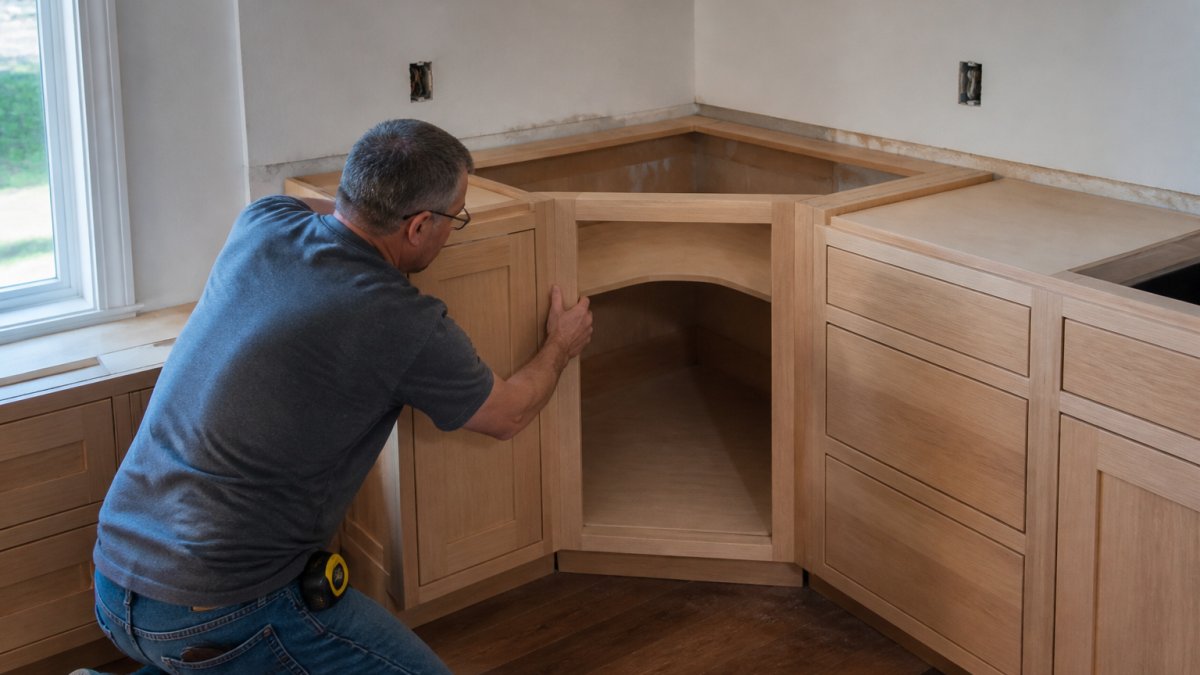
That distinction shows up in awkward corners, sloped ceilings, and non-standard appliance openings. A semi-custom line can usually absorb a few inches of variance.
The trade-off is time and money. Semi-custom moves faster and costs less because the factory is still running standard parts.
Pro Tip If your space is within a few inches of standard, semi-custom often delivers 90% of the look for less. If a wall is out of square or a doorway crowds the run, custom is usually the only option that avoids filler strips.
Custom Cabinets Cost: What You Pay For and What You Get
Custom cabinets cost more upfront because you're paying for design time, individual cutting, and a finish applied to one job rather than a thousand. Mass-produced cabinets spread those costs across an entire factory run. But the sticker price is only the first number in the ledger; what matters is total cost of ownership: purchase, delivery, assembly, installation, modification, repair, and replacement over the life of the kitchen.
Where the money actually goes
Cabinet pricing is usually quoted per linear foot, and the spread between tiers is wide. These are planning ranges, not quotes. Always ask for a line-item quote that separates boxes, doors, hardware, finish, delivery, and installation.
The costs that don't show up on the cabinet quote
Build a total-cost worksheet before you compare tiers:
Delivery: freight for custom and semi-custom runs is often quoted separately; RTA ships flat and usually costs less to move.
Assembly: RTA saves money on the box but costs you time. Budget 30-90 minutes per cabinet for a first-time assembler, or pay a handyman $50-$100 per hour.
Installation: professional cabinet installation commonly runs $100-$300 per linear foot, and custom boxes with scribed fillers and integrated trim can sit at the top of that range.
Modification: cutting a stock box for an outlet, a sink, or an out-of-square wall adds labor and sometimes voids the warranty.
Repair and replacement: a damaged stock door can often be reordered individually; a custom door may require a new finish run and a weeks-long lead time. RTA parts are usually the cheapest and fastest to replace.
A worked example
The gap is real, but so is the difference in fit, finish, and durability. The cheapest quote rarely reflects the full picture, ask what's included: delivery, installation, hardware, finish touch-ups, and warranty terms.
Pro Tip Ask every vendor for a total installed cost, not a cabinet price. The quote that looks 30% cheaper on the box line often closes most of that gap once assembly, installation, and filler work are added.
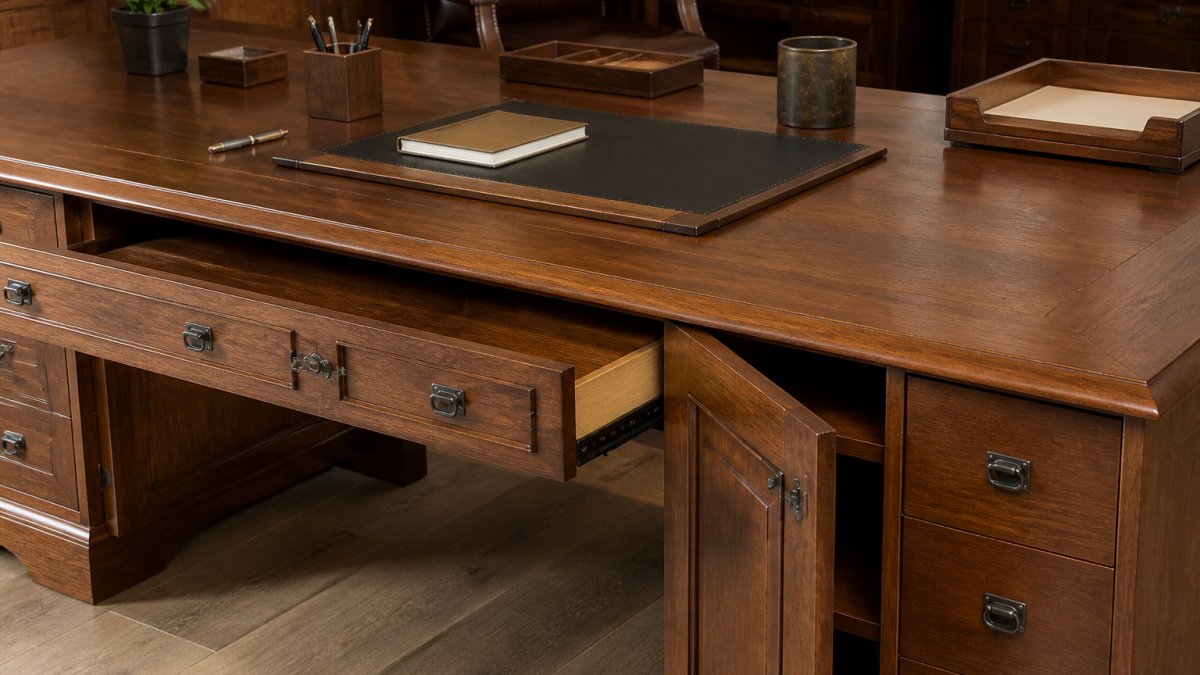
For a sense of how hand-built wood pieces are priced when they're made one at a time, our walnut dining table gives you a real reference point.
Ready-to-Assemble Cabinets Pros and Cons
RTA cabinets are the fastest and most budget-friendly route. They ship flat, cost less to move, and can arrive within days rather than months.
The pros are real:
Lower upfront cost than custom or semi-custom
Fast delivery and easy replacement of damaged parts
Simple assembly with basic tools
The cons show up later: assembly takes time and patience, standard-size boxes leave odd spaces filled with filler panels, and the joinery is usually designed for speed of assembly, not decades of daily use.
Watch Out Skipping the assembly instructions to save time is the most common RTA mistake. Misaligned cam locks or stripped screw holes weaken the box and show up as sagging shelves within a year.
Custom Cabinet Lead Time: Production, Delivery, and Installation
Custom cabinet lead time runs longer than any off-the-shelf option because each piece moves through design, cutting, assembly, and finishing before it ships. Expect weeks, not days, and plan your renovation around that schedule.
Stage | Stock / RTA | Semi-Custom | Custom | Planning Note |
Design and measurement | 1-3 days | 1-2 weeks | 2-6 weeks | Lock this before ordering appliances |
Order processing and production | In stock to 2 weeks | 3-6 weeks | 6-12 weeks | Longest stage; confirm dates in writing |
Delivery | 3-10 days | 1-3 weeks | 2-4 weeks | Confirm access and on-site storage |
Site preparation | 1-3 days | 1-3 days | 1-2 weeks | Flooring, paint, and electrical rough-in first |
Installation | 1-3 days | 3-7 days | 1-3 weeks | Schedule after flooring and paint |
Typical total | 2-5 weeks | 6-12 weeks | 12-24 weeks | Add buffer for inspections and change orders |
What pushes a project to the long end
Finish complexity: a hand-rubbed or multi-step finish adds days per batch and can add weeks across a full kitchen.
Hardware and specialty items: integrated appliances, custom range hoods, and imported hardware often have lead times that exceed the cabinet run.
Change orders: any change after cutting begins restarts part of the production clock.
Site readiness: cabinets that arrive before flooring and paint are done risk damage, and a stalled site can add weeks even when the cabinets are on time.
Seasonal demand: spring and early fall are peak remodeling seasons, and shops and installers book out further ahead.
How to sequence the project
If your renovation has a hard deadline, order custom pieces first and build the rest of the schedule around them:
Finalize design and measure the room.
Place the custom order and get written production and delivery dates.
Complete demolition, electrical, and plumbing rough-in.
Pass inspections.
Install flooring and paint.
Receive and inspect custom pieces; reject damaged pieces before installation.
Install boxes, then doors, drawers, and hardware.
Schedule countertop template after base cabinets are set.
Watch Out Don't schedule countertop templating until base cabinets are installed and level. A template taken too early is the most common cause of a countertop that doesn't fit, and it adds weeks to the back end of the schedule.
Key Takeaway Build a two-week buffer into any custom cabinet schedule. Most delays come from site readiness and change orders, not from the shop, and a buffer absorbs both without moving your move-in date.
Materials and Construction Quality: What to Inspect
Construction quality separates cabinetry that lasts from cabinetry that sags by year five. Inspect the box, not just the door.
Construction Specifications and Quality Checks
Use this checklist before you commit to any cabinet line:
Box material: plywood holds screws better than particleboard over time
Joinery: dovetail or doweled joints outlast stapled corners
Shelf thickness: thicker shelves resist bowing under heavy loads
Drawer glides: test the full extension and the weight rating
Door alignment: open and close every door; gaps should be even
A common mistake is judging cabinets by the door style alone. The box carries the weight, and the box is where cheap construction hides.
Fit, Design Flexibility, and Finishes for Awkward Spaces
Mass-produced cabinets are built to standard sizes, which works beautifully in a standard room. The trouble starts when your room isn't standard.
Awkward spaces are where custom cabinetry earns its keep. Sloped ceilings, radiator covers, window seats, and corners that aren't square all need boxes cut to the actual opening.
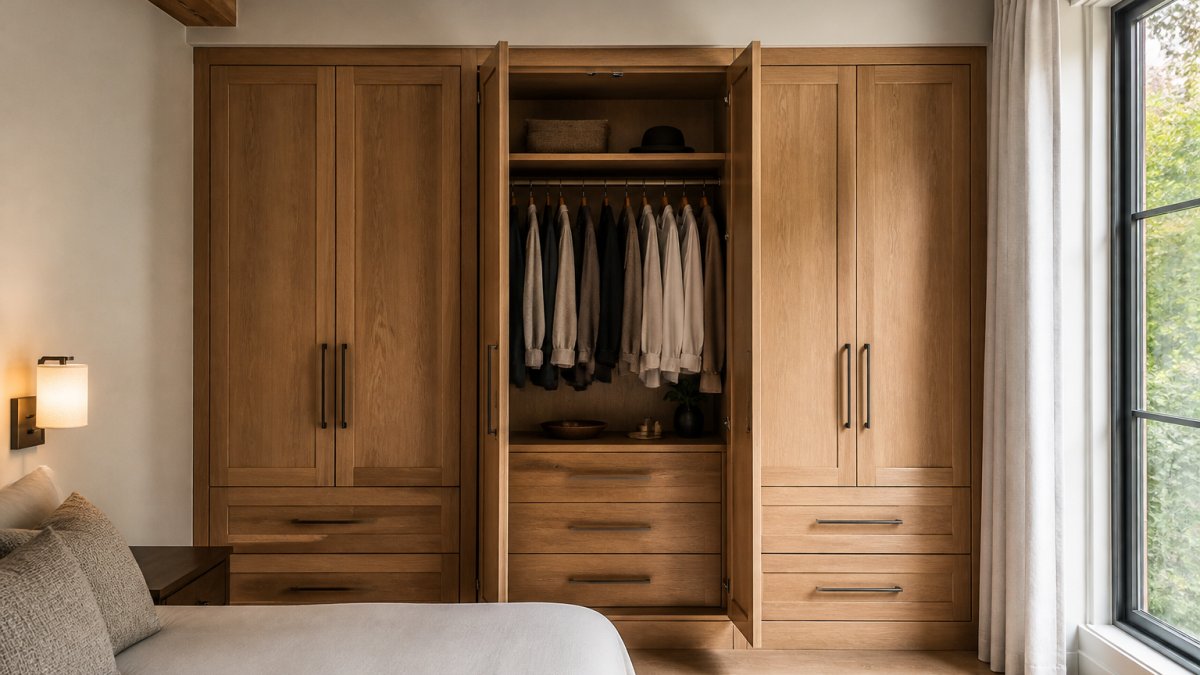
Design flexibility goes beyond fit: custom work lets you choose wood species, finishes, and hardware as one coordinated set, matching an existing floor, repeating a detail from another room, or building storage around how you actually cook.
Key Takeaway The real value of custom cabinetry isn't luxury for its own sake. It's space use: every inch of an awkward room becomes usable storage instead of wasted space behind a filler panel.
If you want to see how a custom piece handles an unusual proportion, our oval walnut dining table shows the same principle applied to furniture.
A Practical Decision Framework for Your Kitchen Remodel
Choosing between custom and mass-produced comes down to four questions:
1. How far is your space from standard? Within a couple of inches, mass-produced or semi-custom works. Anything further out, go custom.
2. What's your timeline? If the renovation is already underway and custom pieces are the last item, stock or RTA keeps you moving.
3. What's the total cost of ownership? A cheaper piece that needs replacing in ten years costs more than a well-built one that lasts thirty.
4. How long are you staying? For a short-term flip, budget-friendly pieces make sense.
Best For Homeowners with awkward spaces, a long-term horizon, and a clear design vision. If speed and upfront cost matter most, mass-produced or RTA is the honest answer.
At Richard Gentry Designs, we build furniture to the specific dimensions and design of each space, which is why we ask about the room before we talk about the finish. Explore our work to see how a made-to-order piece comes together.
The hardest part of a kitchen remodel isn't picking a door style. If your space has awkward angles, unusual dimensions, or a design you can't find on a showroom floor, Richard Gentry Designs builds custom, hand-made wood furniture to your exact measurements, backed by more than 25 years of artisan experience.
Frequently Asked Questions
Are custom cabinets better than stock cabinets?
Custom pieces are built to your exact dimensions and finish, so they use awkward spaces that stock sizes cannot fill. Stock pieces cost less and arrive faster, but they come in fixed widths and limited finishes. If your home has odd angles, a specific design vision, or you plan to stay in the home long term, custom furniture usually delivers better fit and durability. If budget and speed matter most, stock or ready-to-assemble options make more sense.
How much do custom cabinets cost compared with stock cabinets?
Custom pieces cost more upfront because each piece is made to order with your chosen materials and finish. Stock pieces are mass-produced in standard sizes, which lowers the per-unit price. The gap narrows when you factor in fillers, trim, and labor needed to make stock pieces fit an irregular room. For a precise comparison, get a quote that lists components, hardware, delivery, and installation separately so you can see where the money goes.
How long does it take to get custom cabinets?
Custom furniture lead time typically runs several weeks to a few months from final measurements to delivery, depending on shop workload, material availability, and complexity. Add installation time after delivery. Ready-to-assemble and stock pieces can ship in days or be picked up immediately, which suits tight renovation schedules. If your remodel has a fixed completion date, confirm the production timeline in writing before you place a deposit and build in a buffer for delivery and installation.
Can mass-produced cabinets be customized to fit an unusual space?
Mass-produced pieces can be adapted with fillers, trim pieces, and custom end panels, but the pieces themselves stay in standard sizes. That means awkward corners and sloped ceilings often end up with wasted space or visible gaps. A custom furniture maker can build a piece to the exact inch, scribe it to the wall, and match the style to the rest of the room. If your space has unusual angles, custom furniture is the more reliable route.
What are the advantages of ready-to-assemble cabinets?
Ready-to-assemble pieces arrive flat-packed and cost less than assembled stock or custom pieces. They are budget-friendly, ship quickly, and work well for rentals, quick renovations, or DIY installers comfortable with assembly. The trade-offs include assembly time, potential for damage during handling, and fewer finish and size options. Check the construction, hardware quality, and warranty before buying, and confirm the assembly requirements match your skill level and schedule.
SHOP
Comments