


.png)

Custom Furniture vs Mass Production: A Real Comparison
Table of Contents
Custom Furniture vs Mass-Produced Furniture: Key Differences
Craftsmanship and Construction Quality
Custom Furniture Cost: Understanding the Price Difference
Custom Furniture Lead Time and Availability
Custom Furniture for Small Spaces and Unusual Layouts
The Custom Furniture Design Process
Durability, Longevity, and Long-Term Value
Which Option Is Right for You?
Frequently Asked Questions
Last Updated: October 14, 2026
Custom Furniture vs Mass-Produced Furniture: Key Differences
Walking into a furniture showroom, the choice feels simple: grab something off the floor or wait for something made to order. But the real difference in custom furniture vs mass production runs much deeper than availability. At Richard Gentry Designs, we've spent over 25 years helping homeowners and designers understand what separates these two approaches.
Custom furniture design means creating pieces built specifically to your dimensions, materials, and design vision. Mass-produced furniture is manufactured at scale using standardized dimensions, assembly-line methods, and uniform designs. The distinction sounds straightforward until you live with the results.
The choice isn't about taste. It's about whether you're buying a solution to a specific problem or accepting whatever fits the mold.
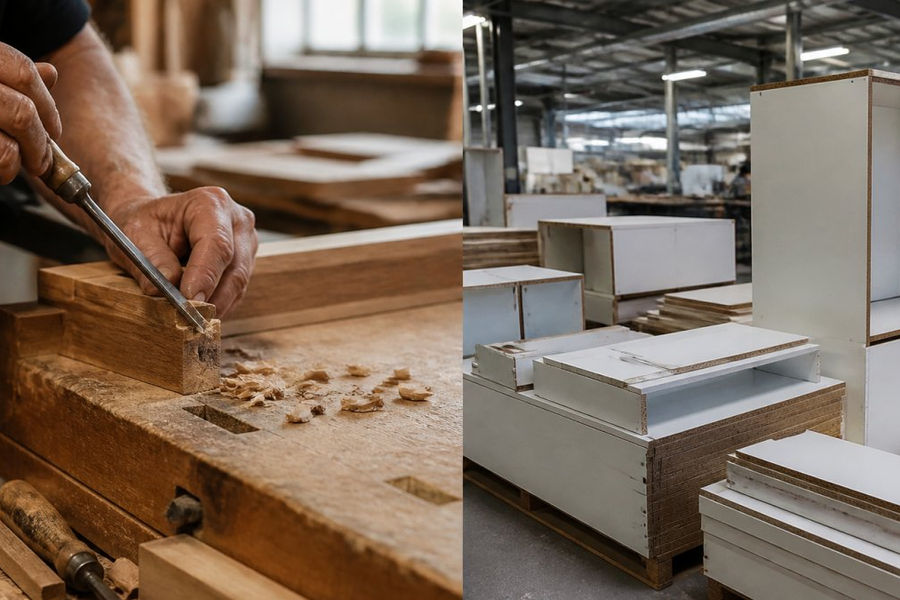
Craftsmanship and Construction Quality
Mass-produced furniture relies on efficiency: assembly lines, standardized cuts, and pre-drilled holes deliver speed and consistency. But speed and consistency aren't the same as quality.
Custom furniture makers use traditional joinery techniques that require skill and time. Each joint is cut individually, wood is selected for grain and color match, and hardware complements the design. The difference isn't subtle when you look at how a piece is assembled.
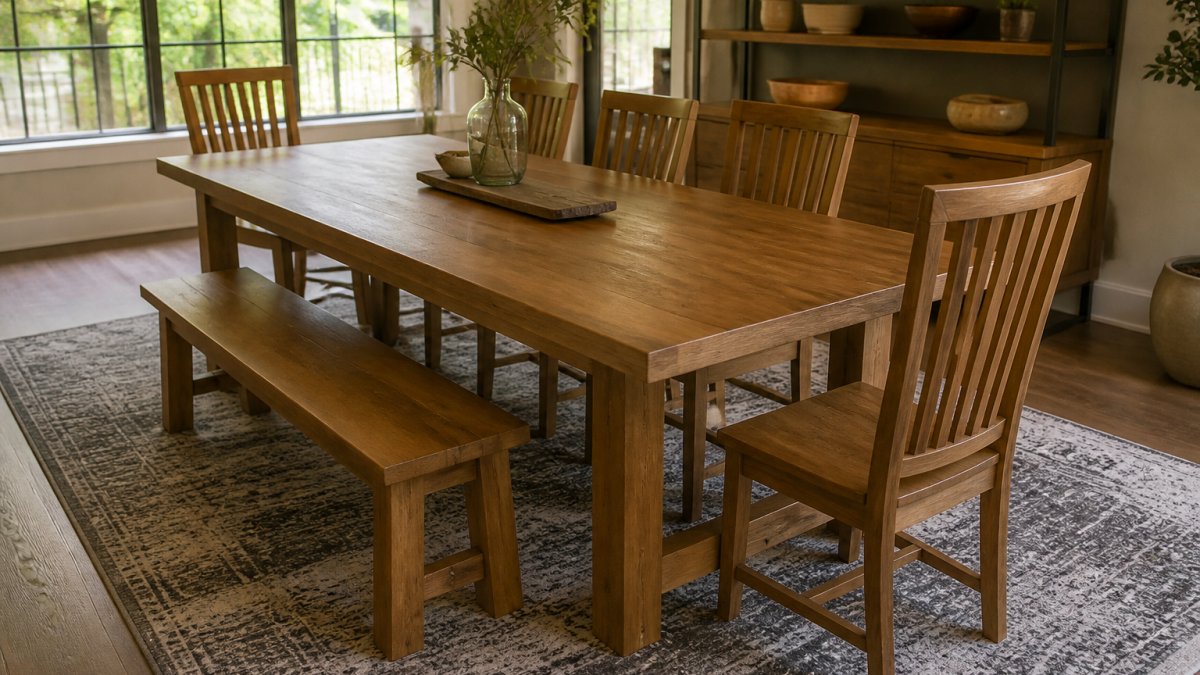
Consider a dining table. A mass-produced version uses pocket-hole joinery and dowels; it holds up reasonably well for a few years. A custom piece from Richard Gentry Designs uses strong, traditional joinery, joints that get stronger as the wood naturally moves and settles.
Construction methods also determine repairability. Mass-produced furniture is often glued together in ways that make repairs nearly impossible, a leg breaks and you replace the entire piece. Custom furniture is designed to be repaired: a broken rung can be replaced, a worn finish refinished.
Materials reflect this difference too. Mass production uses whatever hits the price target: veneers over particle board, stains that hide inferior wood. Custom builders select solid wood, match grain patterns, and choose finishes that enhance rather than disguise the material.
Pro Tip When evaluating construction quality, ask about joinery method. Traditional joinery methods are signals of traditional craftsmanship. Pocket holes and dowels indicate assembly-line efficiency.
Custom Furniture Cost: Understanding the Price Difference
Custom furniture costs more upfront. That's not debatable. But the conversation usually stops there, and that's where most people make the wrong decision.
A mass-produced dining table might cost $800 to $1,500, while a custom piece starts around $2,500. Richard Gentry Designs tables range from $2,850 for a solid walnut farm table to $6,500 for elaborate designs with premium materials. The difference feels enormous at purchase time.
But upfront price isn't total cost. A mass-produced table might need replacement in five to eight years, while a custom piece built with solid wood can last 30+ years with basic care. Spread the cost across actual lifespan and the math shifts dramatically.
Factor in what happens when something breaks. Mass-produced furniture rarely survives damage, a cracked leg sends the piece to landfill. Custom furniture is repairable: a broken rung gets replaced, a scratched finish refinished, at far less than replacing the entire piece.
There's also the cost of compromise. Mass production offers limited options; you choose from what exists. Custom furniture solves for your space, that awkward corner nothing fits?
Key Takeaway Custom furniture costs 2-4x more upfront but lasts 3-5x longer and remains repairable. Mass-produced furniture is cheaper initially but becomes expensive when you calculate true cost of ownership.
Custom Furniture Lead Time and Availability
Custom furniture takes time. A mass-produced piece ships in days or weeks; a custom piece takes months.
Typical lead time for custom work ranges from 8 to 16 weeks, depending on complexity and demand. Richard Gentry Designs works with clients to establish realistic timelines based on the piece, materials, and production schedule.
This matters if you're on a renovation deadline. If your contractor needs the dining table installed in six weeks, custom furniture won't work, you'll need mass production and accept whatever compromise that requires.
But most people aren't actually on a hard deadline, they think they are. A renovation finishes and the room sits empty for three months while they source furniture.
Mass production solves the availability problem, you need a table next week, you can have one tomorrow, but you're choosing from existing inventory. Custom production solves the fit problem: you wait, and you get exactly what you need.
The decision comes down to priority: do you need it fast, or right? For most custom furniture buyers, "right" wins once they understand the timeline upfront.
Custom Furniture for Small Spaces and Unusual Layouts
This is where custom furniture stops being a luxury and becomes a practical necessity.
Standard furniture is built for standard rooms: eight-foot ceilings, rectangular walls, ninety-degree corners. Real homes are messier, sloped ceilings, alcoves, corners that aren't quite square, spaces with architectural features that make standard pieces look wrong.
A custom-sized sofa fits a specific wall. A desk sized for a corner nook uses the space instead of leaving gaps. Shelving built around a window becomes part of the room instead of fighting it.
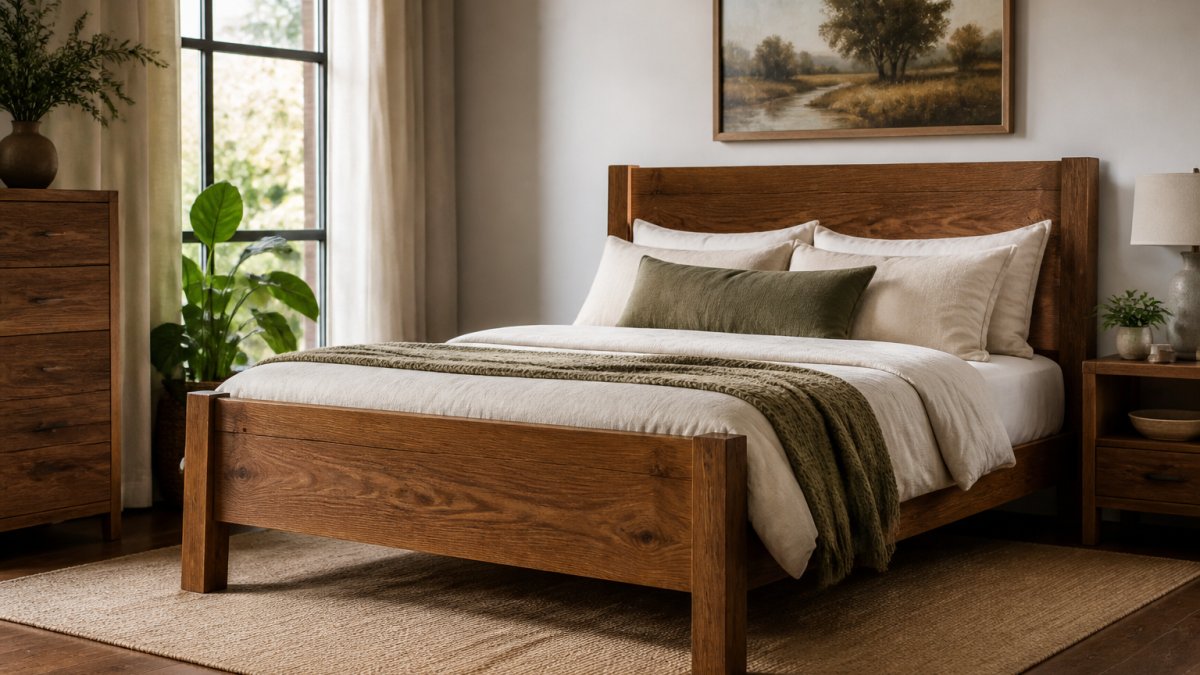
This is where Richard Gentry Designs solves problems mass production can't touch. A client with an unusual bedroom layout needed a bed frame that worked with the space, not against it; off-the-shelf options left gaps or didn't fit the wall proportions.
Small spaces especially benefit from custom sizing. A standard coffee table might be too large; a custom piece uses the exact dimensions your space allows. A desk for a small home office gets built to fit the wall and the person using it, not a generic 48-inch width.
This isn't luxury. It's problem-solving. When your space doesn't fit standard furniture, custom design stops being optional.
Watch Out Mass-produced furniture assumes standard room dimensions. If your space has sloped ceilings, alcoves, unusual wall angles, or non-standard proportions, standard pieces will look awkward or won't fit at all.
The Custom Furniture Design Process
Understanding how custom furniture gets made explains why it takes longer and costs more.
The process starts with conversation. A designer or maker needs to understand your vision, space, needs, and constraints, not browse a catalog. A good maker asks: What will the piece be used for? What materials appeal to you? What's your timeline and budget?
Then comes measurement and planning. For tables or desks, exact dimensions matter, height, width, depth, leg placement, drawer configuration.
Then comes design. Sketches or renderings show what the piece will look like; materials, finishes, and details are refined over several weeks until the design matches the vision.
Once the design is approved, production begins. Wood is selected and milled, joinery laid out and cut, and assembly happens methodically, not on an assembly line, but by a craftsperson or small team building one piece at a time.
From initial conversation to final delivery, a straightforward piece typically spans 12 to 16 weeks. Complex designs, premium materials, or high demand can extend that.
This is fundamentally different from mass production, where design happens once and manufacturing happens at scale. Custom work means design, production, and quality control happen together for each piece.
Durability, Longevity, and Long-Term Value
Custom furniture's advantage becomes clearest over time.
Mass-produced furniture is engineered for a specific lifespan: built to last long enough to justify the price, then be replaced. Particle board doesn't age well, veneers peel, glued joints fail, finishes wear through. After five to ten years, repair isn't practical, you buy another one.
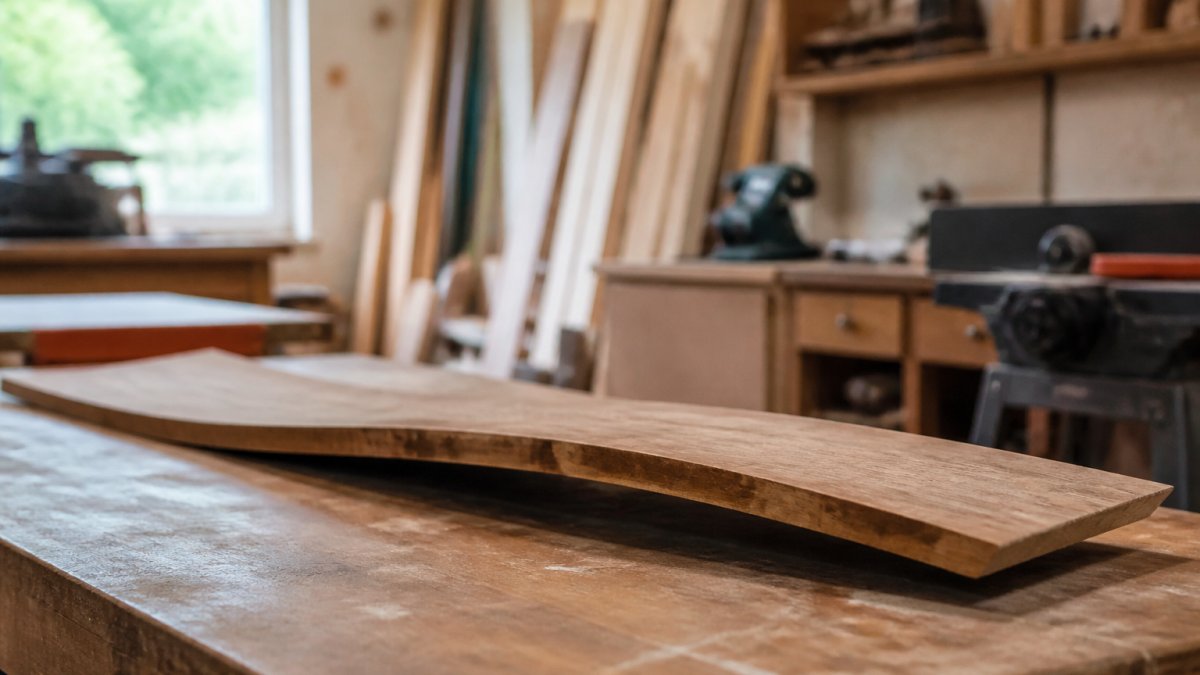
Custom furniture built with solid materials improves with age. Wood develops character and patina, and a cared-for finish deepens. The piece looks better at 20 years than at five.
Durability depends on materials and construction. Solid wood outlasts veneer over particle board. Quality joinery outlasts pocket holes. Hand-applied finishes that can be refreshed outlast factory finishes that can't be repaired. Custom builders choose materials and methods with longevity in mind.
Repairability extends lifespan further. A worn finish gets refinished. These repairs cost a fraction of replacement and keep the piece functional for decades.
Long-term value compounds this. A custom piece costing $3,000 upfront and lasting 30 years costs $100 per year; a mass-produced piece costing $1,000 and lasting 8 years costs $125 per year. Add replacement costs and the custom piece becomes cheaper over time. Some become heirlooms, still functional after 50+ years, a value proposition mass production can't match.
Comparison Factor | Custom Furniture | Mass-Produced Furniture |
Upfront Cost | $2,500-$6,500+ | $800-$2,000 |
Typical Lifespan | 20+ years | 5-10 years |
Repairability | High, finishes can be refinished | Low, usually replaced rather than repaired |
Material Quality | Solid wood, selected grain, premium finishes | Veneers, particle board, stains |
Construction | Hand-fitted joinery | Assembly line, pocket holes, dowels |
Customization | Built to exact specifications | Limited to existing designs |
Lead Time | 8-16 weeks | Days to weeks |
Cost Per Year (over lifespan) | $100-$125/year | $100-$250/year |
Which Option Is Right for You?
The answer depends on what you actually need, not what sounds better.
Choose mass-produced furniture if you need something immediately, your budget is fixed and limited, you're renting and expect to move frequently, or your space fits standard dimensions perfectly. Mass production solves for speed and affordability. It's a legitimate choice when those are your priorities.
The decision comes down to timeline and permanence. Are you furnishing a temporary space or investing in your home? Do you need it now or can you wait for something better? Is this a piece you'll live with for years or replace in a few?
For most homeowners in Nashville and Middle Tennessee investing in renovations, upgrading their space, or working with an interior designer on a high-end project, custom furniture solves problems mass production can't touch. Richard Gentry Designs specializes in exactly this, creating pieces that fit your space, match your vision, and last for decades.
The real comparison in custom furniture vs mass production isn't about price. It's about whether you're buying furniture or solving for your space.
When your home renovation reaches the furniture stage, you face a choice that feels simple but carries long-term consequences. Richard Gentry Designs brings over 25 years of artisan experience to custom wood furniture, creating farm tables, desks, cabinetry, and beds that transform your home with genuine craftsmanship. Ready to explore custom furniture built for your space? SHOP custom pieces that reflect your vision and stand the test of time.
Frequently Asked Questions
Is custom furniture worth the higher price?
Custom furniture costs more upfront, typically $2,500 to $6,500 for dining tables at Richard Gentry Designs, but offers precision fit, material selection, and durability that mass-produced pieces rarely match. If you need exact dimensions for an unusual space, specific wood species, or a design that reflects your vision, the investment often pays back through longevity. Mass-produced furniture may cost less initially but typically requires replacement within 5-10 years, whereas custom, handcrafted pieces can last 20+ years with proper care.
How long does it take to have custom furniture made?
Custom furniture lead times vary based on complexity and the maker's schedule, typically ranging from 8 to 16 weeks. Simple pieces may be faster; complex designs with multiple wood species or intricate joinery take longer. If you're working against a deadline, discuss timelines upfront with your craftsperson. Mass-produced furniture ships in days or weeks, so custom work requires advance planning. Richard Gentry Designs works with clients to establish realistic timelines based on your project needs.
Can custom furniture be made to fit an unusual space?
Yes. Custom furniture is designed specifically for your space, making it ideal for awkward corners, sloped ceilings, alcoves, or non-standard wall dimensions. A craftsperson can measure your exact layout and build a piece that fits perfectly, whereas mass-produced furniture comes in fixed sizes. This is especially valuable in older homes or condos with irregular layouts. Custom sizing ensures the furniture functions properly and maximizes your available space.
What's the difference between custom and bespoke furniture?
Custom and bespoke are often used interchangeably, but bespoke typically implies handcrafted pieces made from start to finish by a skilled artisan based on your specifications. Custom can sometimes refer to modified versions of existing designs. At Richard Gentry Designs, pieces are handcrafted to your exact vision. Both differ fundamentally from mass-produced furniture, which is manufactured in high volume using assembly-line methods with standardized dimensions and limited personalization.
Is mass-produced furniture less durable than handmade furniture?
Generally, yes. Mass-produced furniture prioritizes speed and cost efficiency, often using cheaper materials, mechanical fasteners instead of quality joinery, and veneers over solid wood. Handcrafted custom furniture uses solid wood, quality hardware, and finishes built to last. A mass-produced dining table may show wear or fail within 5-10 years, while a handcrafted piece with proper maintenance can function well for decades. The difference becomes obvious over time through durability and the ability to repair custom pieces.
SHOP
Comments