


.png)

Is Custom Furniture Worth the Price? A Buyer's Guide
Table of Contents
The Real Cost Difference: Custom vs. Mass-Produced Furniture
How Long Does Custom Furniture Take to Build
Custom Furniture Cost Breakdown: Where Your Money Goes
Material Quality and Craftsmanship: Why It Matters
How to Collaborate on Furniture Design With an Artisan
When Custom Furniture Makes Sense (and When It Doesn't)
Long-Term Value: Investment Pieces That Last Decades
Conclusion
Last Updated: August 28, 2026
The Real Cost Difference: Custom vs. Mass-Produced Furniture
Mass-produced furniture ships from factories optimized for volume and standardized dimensions. Custom furniture is built one piece at a time by skilled craftspeople. A mass-produced dining table costs $800-$1,500, while a custom table from an artisan like Richard Gentry Designs typically ranges from $2,850 to $6,500, depending on wood species, complexity, and dimensions (the FDA).
Mass production achieves low prices through standardization and bulk material ordering. Custom makers source specific wood, hand-craft each piece, and work with smaller batches, making their cost-per-unit inherently higher. The real question isn't whether custom costs more, it does, but whether the value justifies the price.
Key Takeaway Custom furniture costs 2-4x more than mass-produced equivalents, but the price difference reflects material quality, craftsmanship intensity, and personalization, not just brand markup.
How Long Does Custom Furniture Take to Build
A typical custom piece requires 8 to 16 weeks from design approval to delivery (the NIH). The timeline breaks down as: initial design consultation (1-2 weeks), material sourcing and approval (2-4 weeks), and construction (6-10 weeks). Specialty wood or intricate joinery adds 2-4 weeks. Rush orders sometimes compress timelines by 2-3 weeks at most, with premium pricing.
This differs dramatically from mass-produced furniture, which ships in days. If your renovation deadline is three months away, custom is possible if you move quickly on decisions.
Pro Tip Communicate specific delivery dates upfront during initial consultation. Makers can sometimes adjust schedules with advance notice, though this may affect pricing.
Custom Furniture Cost Breakdown: Where Your Money Goes
Material costs account for 20-30% of the final price. High-quality solid hardwood costs significantly more than particle board or veneer. Premium walnut runs $200-$400 per board foot; a dining table uses 15-25 board feet, totaling $3,000-$10,000 in raw materials alone (usda.gov).
Labor and craftsmanship represent 40-50% of the cost. A skilled furniture maker spends 60-120 hours building a custom dining table. At typical woodworking rates of $50-$80 per hour, labor alone runs $3,000-$9,600.
Finishing and hardware add 10-15%. Custom stains, hand-applied finishes, and quality hardware cost more than bulk alternatives.
Design consultation and customization account for 5-10%, covering meetings, design iterations, and translating your vision into buildable specifications.
Overhead and business operations cover 5-10%, including studio rent, tools, insurance, and administration.
A $4,500 custom dining table breaks down roughly as: $1,200 materials, $2,250 labor, $600 finishing, $300 design, $150 overhead. The price reflects actual costs, not arbitrary markup.
Material Quality and Craftsmanship: Why It Matters
Mass production prioritizes speed and cost reduction, using dowels or pocket screws for joints. Custom makers use traditional joinery, mortise and tenon, dovetail, creating stronger, more durable connections.

Mass-produced furniture uses veneer over particle board, which cannot be refinished if damaged. Custom solid hardwood can be sanded and refinished multiple times over decades. Dents can be steamed out, scratches sanded smooth. The piece improves with age.
Craftsmanship means attention to invisible details: hidden joints are as carefully constructed as visible ones, wood movement is anticipated in design, and finish quality is consistent across all surfaces. These details determine whether furniture lasts 10 or 50 years.
Watch Out Mass-produced furniture with veneer cannot be refinished. Solid wood furniture can be sanded and refinished indefinitely, making it a true long-term investment.
How to Collaborate on Furniture Design With an Artisan
Start with a detailed design consultation. Bring reference images, dimensions, and a clear description of your needs. Discuss aesthetic preferences, functional requirements, and budget.

After consultation, expect a formal design proposal with scaled drawings, material specifications, finish options, and a detailed quote. Material selection is critical, you'll choose wood species and see finish samples. Seeing actual samples in your home's lighting is essential, as wood color shifts dramatically.
Once you approve the design and materials, construction begins. Resist requesting major changes mid-build; they're expensive and time-consuming. The final step is delivery and installation, which includes care instructions and warranty information.
Pro Tip Provide detailed reference images and measurements early. Specific input reduces design revisions and accelerates the process.
When Custom Furniture Makes Sense (and When It Doesn't)
Custom furniture makes sense when:
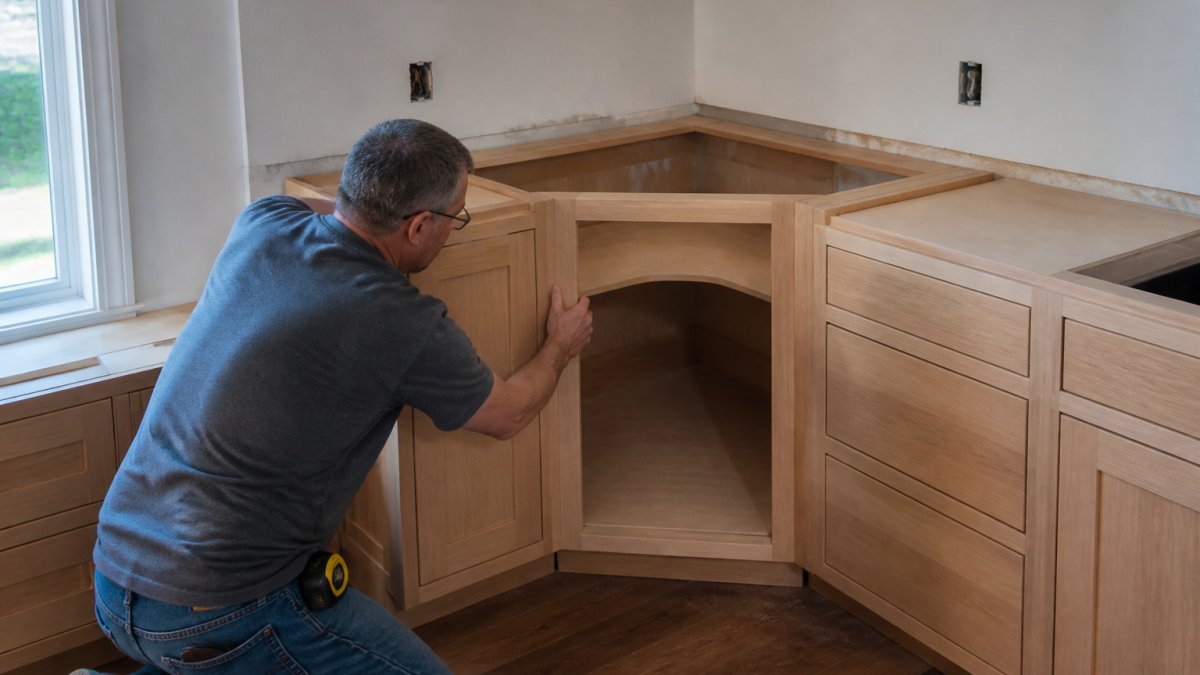
Your space has non-standard dimensions, corner alcoves, sloped ceilings, or awkward walls. Custom sizing maximizes functionality and aesthetics.
You have a specific design vision you can't find mass-produced. Custom makers can build almost anything you envision.
You prioritize longevity and sustainability. Solid hardwood pieces last 30+ years and can be refinished rather than replaced.
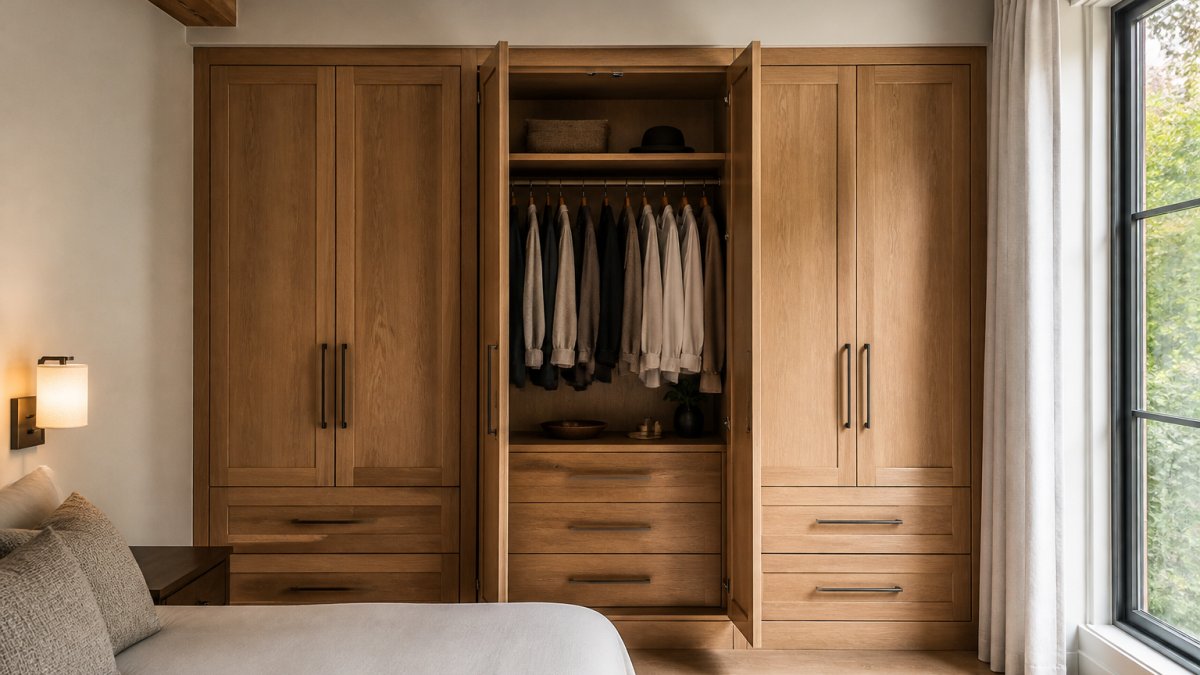
You need precise ergonomics or functionality, like a desk built to your exact height or a cabinet designed around your storage needs.
Custom furniture doesn't make sense when:
You need something immediately. Mass-produced furniture is your only option for tight timelines.
You're on a tight budget with standard space requirements. A $1,200 sofa from a quality retailer offers excellent value if it meets your needs.
Your design preferences change frequently. Custom pieces represent long-term commitments.
You're uncertain about your needs. Clarify preferences with mass-produced options first.
You need multiple matching pieces quickly. A full suite custom takes months and costs substantially more.
Custom furniture is worth the price when your situation demands it, non-standard spaces, specific design visions, or long-term value. For standard needs and tight timelines, mass-produced furniture is practical.
Long-Term Value: Investment Pieces That Last Decades
The upfront cost is higher, but the cost-per-use calculation changes dramatically over time. A mass-produced table costs $1,000 and lasts 8-10 years ($100-$125 per year). A custom table costs $4,500 and lasts 40+ years ($112 per year initially, dropping to $90 per year over 50 years, or $75 over 60 years).
A custom piece can be refinished after 20 years for $500-$1,000. A mass-produced table with veneer damage is essentially done. A 30-year-old handcrafted walnut table retains 40-60% of its original value; mass-produced furniture typically retains 10-20%.
Furniture Type | Initial Cost | Lifespan | Cost Per Year (10 yrs) | Cost Per Year (50 yrs) | Refinish Cost | Resale Value |
Mass-Produced | $1,000-$1,500 | 8-10 years | $100-$150 | N/A (replaced) | Not possible | 10-20% |
Custom Handcrafted | $3,000-$6,500 | 40-60+ years | $300-$650 | $60-$130 | $500-$1,000 | 40-60% |
Over a 40-50 year lifespan, a custom piece often costs less per year than mass-produced furniture you replace every decade, plus it can be refinished and retains resale value.
Key Takeaway Over a 40-50 year lifespan, a custom piece often costs less per year than mass-produced furniture you replace every decade, plus it can be refinished and retains resale value.
Is custom furniture worth the price? For non-standard sizing, specific design visions, longevity, or furniture to pass down, custom craftsmanship delivers returns that justify the investment.
Richard Gentry Designs brings over 25 years of experience to every custom commission. Whether you need a farm table that fits your exact space, a desk built to your ergonomic specifications, or cabinetry designed around your home's architecture, handcrafted furniture solves problems mass production cannot. Get started with a design consultation and discover how custom solutions transform your space with truly unique, artisan-made pieces built to last.
Frequently Asked Questions
Q: Is custom furniture really worth the price compared to store-bought options?
A: Custom furniture costs more upfront, but the value lies in durability, precision sizing, and design tailored to your space. A handcrafted piece built with solid hardwood and proper joinery techniques can last 30+ years, while mass-produced furniture often requires replacement within 5-10 years. Custom furniture also fits awkward spaces perfectly and holds resale value better, making it an investment piece rather than a disposable purchase.
Q: How long does custom furniture take to build, and can I rush the timeline?
A: Most custom pieces take 8-16 weeks from design approval to delivery, depending on complexity, wood selection, and the artisan's current workload. Rushing typically isn't an option without compromising quality, handcrafted furniture requires proper drying time for wood, careful construction, and thorough finishing. If you have a tight deadline, discuss it upfront with your artisan so they can plan accordingly or suggest designs that fit your timeline.
Q: What factors influence the price of custom wood furniture?
A: Custom furniture pricing depends on wood type (solid hardwood like walnut costs more than pine), size and complexity of design, finishing options, lead time, and the artisan's experience level. Material quality and structural integrity drive costs, solid hardwood with proper joinery commands higher prices than veneered or particle-board alternatives. Customization for tailored dimensions, special finishes, or intricate design specifications adds to the final price. At Richard Gentry Designs, pieces range from $1,400 for simple side tables to $6,500 for elaborate dining tables with premium wood and detailed craftsmanship, reflecting these variables.
Q: Is custom furniture worth it for small spaces?
A: Custom furniture is especially valuable for small spaces. Tailored dimensions ensure every piece fits perfectly, eliminating wasted space and awkward gaps. A custom desk or dining table built to your exact measurements maximizes functionality in tight areas where mass-produced options don't fit. This precision also improves ergonomics and aesthetics, no oversized furniture crowding a small room. For apartments or homes with unusual layouts, custom solutions often cost less than buying multiple pieces that don't quite work, making them a smart investment for space optimization.
SHOP
This article was written using GrandRanker
Comments